How Denver's $18M Offer Pushed Watson Out
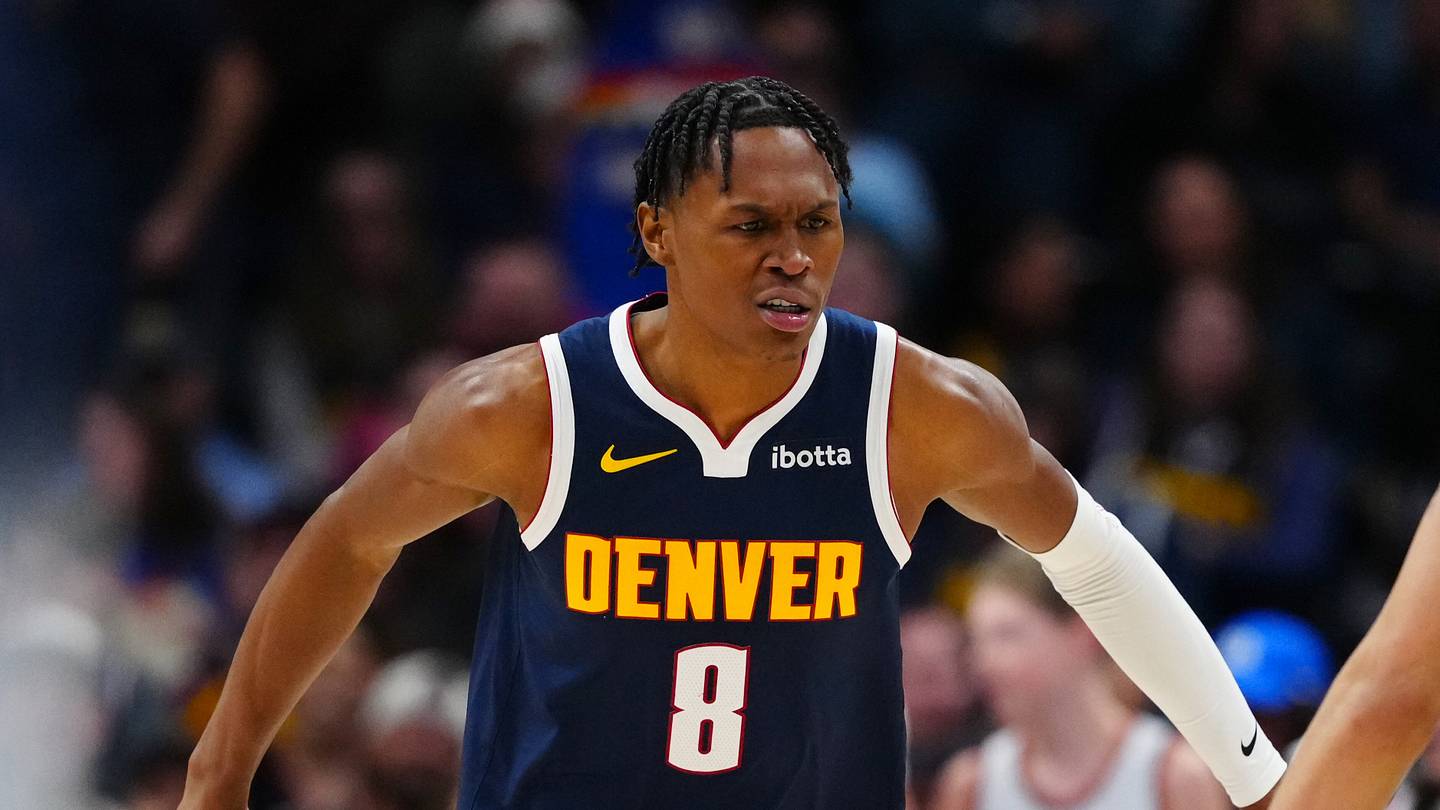
Source: SI NBA. Casualplayhub News adds summary, context, and editorial framing while linking back to the original report.
The Denver Nuggets made their most significant move of the offseason by trading Peyton Watson to the Cleveland Cavaliers. Initially, the franchise signaled a strong desire to keep the young wing, but those plans unraveled as contract talks stalled. Fans have expressed lingering disappointment over the departure, yet newly revealed details about the Nuggets' offer clarify why a deal was never reached.
Watson ultimately inked a four-year, $88 million deal with the Cavaliers. Denver, however, stood firm on a proposal of roughly $18 million per year over four seasons, according to Bennett Durando of The Denver Post. Durando reported that the Nuggets drew a line in the sand early in free agency, citing a hit in organizational trust. They offered a contract with an ascending salary structure and a team option, not the player option Watson secured from Cleveland. The initial offer was immediately rejected, and Denver never returned with a counterproposal.
Durando noted that Denver's proposal fell about $16 million per year short of what the Cavaliers paid, plus the team option made it less attractive. For Watson and his representatives at Klutch Sports, the decision was straightforward.
During the offseason, negotiations were clouded by reports that Watson sought a deal nearer to Christian Braun's $25 million annual salary. While Watson did not reach that mark, Denver's offer likely felt like an understatement. The Nuggets had several reasons for holding back, including their financial situation. But according to Durando, the team harbored specific reservations about Watson's dependability and maturity. Those concerns, shared by league sources, were perceived by Watson's camp as disrespectful, casting a shadow over the entire negotiation process.
Despite those doubts, the Nuggets thought highly enough of Watson to pursue an extension at the right price. However, the trust issues proved insurmountable. Watson posted a message to Nuggets fans on Instagram after the trade, hinting at his frustration.
Looking back, Denver's caution makes sense from a business perspective. Watson delivered one standout month of basketball in four seasons with the Nuggets. His potential as a two-way star is undeniable, but the team was not in a position to overpay a player with an inconsistent track record. Still, the handling of negotiations struck some observers as oddly dismissive, as if the front office wanted him gone.
If Watson thrives in Cleveland, the Nuggets' front office could face significant criticism. His former teammates and fans hope he succeeds, but the decision may haunt Denver if he develops into a star. The Nuggets prioritized financial discipline over retaining a promising young asset, and the outcome of that gamble remains to be seen.
Article commentary
The breakdown of contract talks between the Denver Nuggets and Peyton Watson offers a revealing case study in team-building priorities and the delicate art of player valuation. At first glance, the Nuggets' refusal to match or come close to the Cavaliers' four-year, $88 million offer seems puzzling, especially given Watson's youth and potential. However, a deeper look shows a front office operating under severe financial constraints and with a clear set of internal metrics that placed Watson below the premium they were willing to pay. Denver's offer of $18 million annually with a team option was effectively a bet that Watson's market would not exceed that figure. But the team's concerns about his dependability and maturity, which his camp deemed disrespectful, added an emotional layer that soured negotiations. Such accusations can poison trust, making it nearly impossible to salvage a deal even if the numbers are close. For the Nuggets, the cap situation is a legitimate factor. With max contracts already allocated to Nikola Jokic and Jamal Murray, and with Christian Braun earning $25 million per year, adding another $22 million-plus commitment for Watson would have created a top-heavy payroll with limited flexibility. The front office likely viewed Watson as a luxury they could not afford, especially after seeing inconsistent production. Yet the risk is considerable. Watson's athleticism and defensive versatility make him a potential star in a different system. In Cleveland, he will have more offensive freedom and a chance to develop without the pressure of Denver's win-now window. If he blossoms into a two-way force, the Nuggets will face scrutiny not just for the lost talent, but for the way negotiations were handled. The perception of disrespect could also harm Denver's reputation with future free agents. On the other hand, the Nuggets' disciplined approach reflects a trend in modern NBA front offices: prioritizing flexibility and avoiding overpays for players with limited track records. Watson's one great month does not guarantee stardom, and the team may have correctly assessed his ceiling. Time will tell whether Denver's caution or Cleveland's bet proves wiser. What is clear is that this saga underscores the emotional and financial complexities of contract negotiations. Trust, both in a player's character and in his future performance, can be as valuable as any dollar figure. The Nuggets chose to trust their financial model and their internal assessments, while Watson chose to bet on himself elsewhere. Both sides have something to prove.