Tiafoe Comforts Michelsen in Emotional US Open Victory
Source: ABC News Sports. Casualplayhub News adds summary, context, and editorial framing while linking back to the original report.
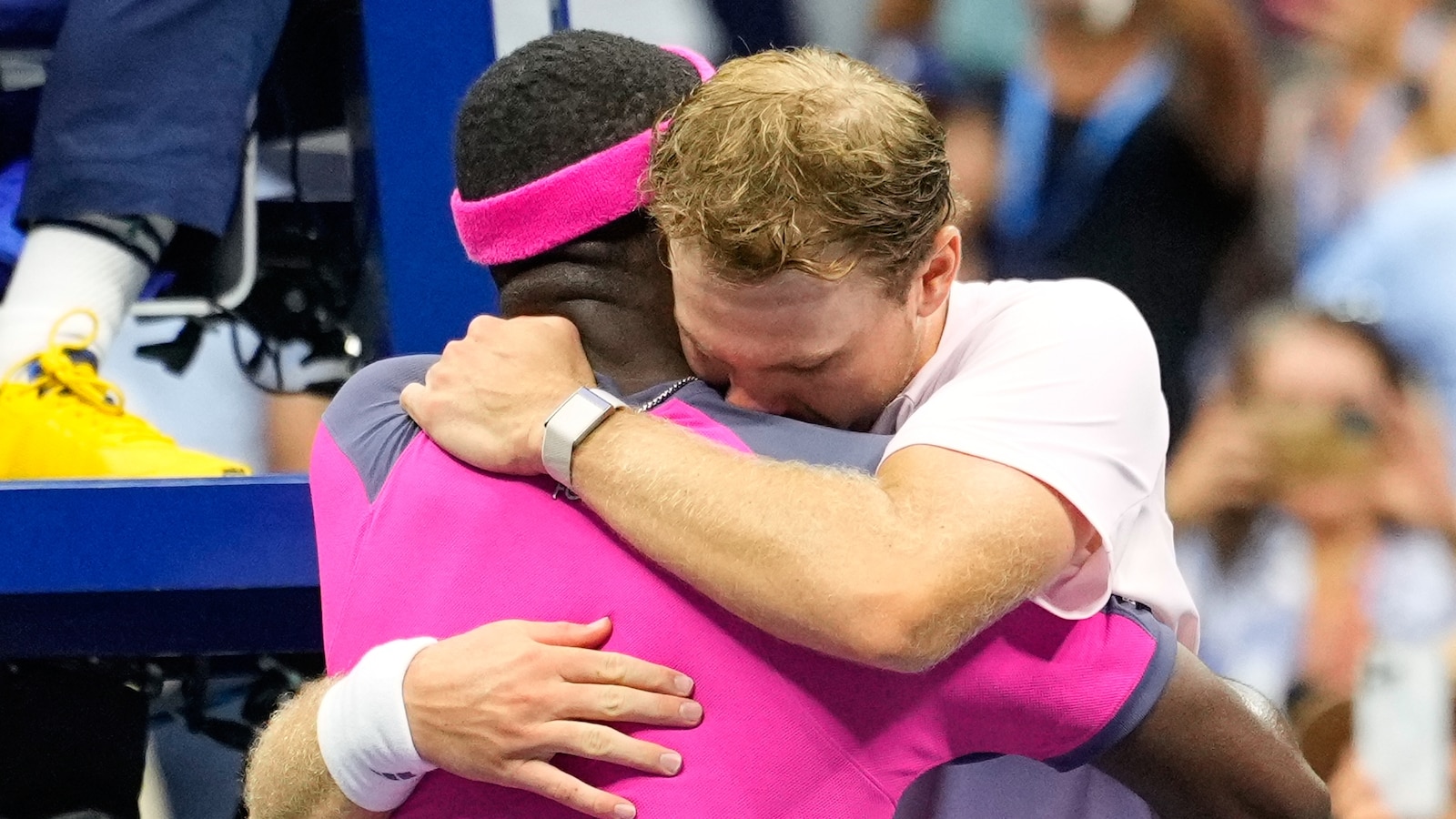
NEW YORK -- The Arthur Ashe Stadium crowd had just witnessed a five-set thriller, but the most memorable moment came after the final point. Frances Tiafoe, having clawed back from two sets down to beat Alex Michelsen 5-7, 3-6, 7-5, 6-3, 7-6 (10-6) in the U.S. Open quarterfinals, did not celebrate. Instead, he walked to the net and wrapped his arms around his fellow American, who was already overwhelmed with emotion.
Michelsen, 22, had been just points away from reaching his first Grand Slam semifinal. Leading by two sets and serving at 5-4 in the third, he could not seal the win. Tiafoe, a seasoned competitor at 28, seized the opportunity, breaking back and eventually forcing a deciding tiebreak. As the match slipped away, Michelsen fought back tears, and when they met at the net, he could no longer hold them in.
Tiafoe held him in a long embrace while Michelsen sobbed into his shoulder. Tiafoe whispered words of encouragement, a gesture that resonated far beyond the court. I really like Alex. I really, really do, and I just wanted to come up there and just dap him up, Tiafoe said. I didn't think it was going to be as long as it was, but I understand the moment. He was definitely crying on my shoulders. We just had some words for each other, and that was it.
Michelsen struggled to speak at the net. I was trying to keep it together and I didn't do a good job of that, he admitted. He was saying a lot of nice personal things. You'll be there. When I'm older, you're going to be here, and we're going to play it again in this type of circumstance. All that good stuff. He's a great guy for consoling me in that moment.
The two have known each other for years, sharing practice courts and friendly banter. This was their third professional meeting, all won by Tiafoe. But this time, the stakes were higher. Tiafoe, a fan favorite and now a three-time U.S. Open semifinalist, recognized the weight of the loss for his younger countryman. After the match, he told the crowd, He easily could have won today so shout out to Alex Michelsen.
Michelsen left the court with a towel over his head, raising an arm to acknowledge the cheering fans. His resilience did not go unnoticed. Jessica Pegula, who watched the conclusion before her own quarterfinal, said the embrace moved her deeply. Just seeing Alex hug him at the end, I started crying in the locker room, the No. 3-ranked American said. It was so heartbreaking. My heart hurt so much.
The moment underscored the bond among American tennis players, even in the heat of competition. Tiafoe, known for his charisma and sportsmanship, showed that victory can be tempered with empathy. For Michelsen, the tears were a testament to how close he came. But as Tiafoe's words hinted, this loss might be a stepping stone to greater things.
Article commentary
The image of Frances Tiafoe holding Alex Michelsen as he wept on his shoulder will linger long after the final ball was struck. In a sport defined by individual battles, such raw expressions of empathy are rare and powerful. Tiafoe's gesture was not merely a moment of kindness; it was a reflection of the culture he helps cultivate in American tennis. Tiafoe, at 28, has become a leader among the next generation. His ability to balance fierce competitiveness with genuine warmth sets him apart. He did not need to console his opponent; he could have celebrated his comeback triumph. Instead, he recognized the human cost of defeat. This sportsmanship elevates the game beyond statistics and rankings. For Michelsen, the loss was crushing, but the embrace may prove more valuable than any trophy. He learned that failure does not have to be faced alone. Tiafoe's words, predicting that Michelsen would be back in such moments, carry weight. At 22, Michelsen has already shown the talent to challenge top players. His emotional response reveals how much he cares, a quality that often fuels future success. The incident also highlights a shift in male sports culture. Vulnerability is no longer hidden; it is acknowledged and supported. Pegula's reaction, crying in the locker room, shows that this empathy transcends gender lines. It speaks to a broader understanding that athletes are human first. Yet, some might argue that Tiafoe's hug, however sincere, could be seen as patronizing. But Michelsen's own words dismiss that: I don't think anyone else could have made me cry in that moment. The trust between them turned a painful defeat into a teachable moment. Looking ahead, this match could be a turning point for both players. Tiafoe advances to his third U.S. Open semifinal, adding to his legacy. Michelsen, armed with the knowledge that he can push a top seed to the limit, will return stronger. The rivalry is only beginning. Ultimately, what happened at the net was not just about tennis. It was about humanity. In an era where winning is often prioritized above all else, Tiafoe reminded us that character matters as much as titles. That lesson, delivered through a simple hug, may inspire a generation of players to compete with heart and honor.