Grizzlies Set for Brutal Road-Heavy 2026-27 Season
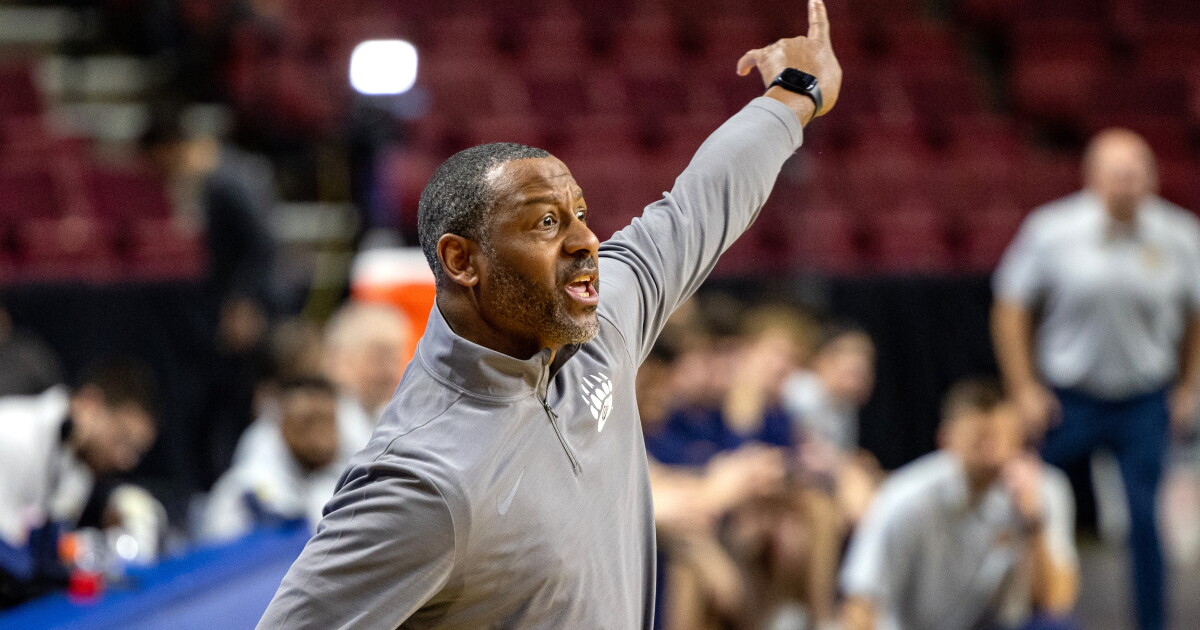
Source: Montana Sports. Casualplayhub News adds summary, context, and editorial framing while linking back to the original report.
Ad eligibility review: sensitive-topic
MISSOULA — The Montana Grizzlies men's basketball program has locked in its 2026-27 schedule, a slate packed with high-profile road tests and significant conference realignment. Coach Travis DeCuire and his team will play five non-conference home games while venturing out to challenge three Power 4 schools and other top-tier programs. The Big Sky Conference is reshaping: Sacramento State is leaving the league, and Utah Tech along with Southern Utah are entering, increasing the conference to 11 members.
DeCuire sees both opportunity and hardship in this schedule. "I like the schedule in terms of the competitiveness of it," he said. "As you look at it, three consecutive road games, come home, three more road games. We miss a lot of school and it's going to be grueling, but it prepares us for conference when you look up and see we have four consecutive road games in Big Sky play. We can say we've been there."
The Grizzlies will indeed face a brutal early test. From Nov. 4 through Dec. 8, they play six of seven games away from Dahlberg Arena. The season opens on Nov. 2 at Oregon, marking the 31st meeting between the schools and the fourth in six years. DeCuire is 0-5 all-time against the Ducks. "We would like to play games in Seattle but that opportunity hasn't presented itself," DeCuire said. "We typically see Oregon about every other year because they're one of the few that will say yes."
The road swing continues on Nov. 10 at San Francisco, the 10th meeting overall and second in three years. That game kicks off three straight away from Missoula, with stops at North Dakota (Nov. 14) and Kansas State (Nov. 16). DeCuire is 10-1 against former Big Sky foe North Dakota, while the matchup with Kansas State is the first since 1978 — a game Montana won. The Grizzlies hold a 1-1 all-time record against the Wildcats.
Another daunting road trip ties into the start of Big Sky play. Montana faces Northern Arizona on Dec. 3 in a standalone league game. To fill the rest of that weekend, DeCuire scheduled a Dec. 5 game at Utah State — the 43rd meeting overall and second under his tenure. The Aggies beat Montana 95-83 in November 2024. The Grizzlies also added a Dec. 7 game at Arizona State, their first matchup with the Sun Devils since 1976 (Arizona State leads the series 3-1). "We thought while on the road it made sense to try to attach a road game to the NAU trip," DeCuire explained. "For the last game, we struggled to get dates that made sense and ended up adding this Arizona State game to the trip. It's not necessarily what I wanted, but it was an opportunity we couldn't turn down."
Montana's final non-conference road game comes Dec. 12 at Cal Poly, a return trip in a home-and-home after the Grizzlies won 90-82 in Missoula last season.
The home schedule features a mix of lower-division and Division I opponents. The Grizzlies open their home slate Nov. 4 against Salish Kootenai, then host Carroll College on Nov. 23. The first Division I opponent in Missoula is South Dakota on Dec. 8, part of a scheduling agreement between the Big Sky and the Summit League. The non-conference home portion closes with back-to-back games: Pepperdine on Dec. 18 and Providence on Dec. 21.
Pepperdine stands out as a marquee home matchup. "That's a big home game. Any time we can get Mountain West or WCC teams in our building it's an incredible opportunity to see where we're at," DeCuire said. "We usually play those types of games on the road and those are tougher games. To have those opportunities at home is always a measuring stick." It's the first meeting between the two since 2016; DeCuire is 1-1 against the Waves as a head coach and also faced them as a player.
After the non-conference grind, the Grizzlies open Big Sky play with two home games against Northern Colorado and Portland State — the teams they eliminated from last year's conference tournament. A stretch of four straight home games runs from Dec. 18 to Jan. 2, giving Montana nearly a month without road travel.
The Brawl of the Wild rivalry with Montana State takes place Jan. 23 in Bozeman and Feb. 27 in Missoula, the latter being the second-to-last game of the regular season. The Grizzlies welcome newcomers Utah Tech (Jan. 25 at home, Feb. 22 away) and Southern Utah (Jan. 18 away, March 1 away). DeCuire said he'll miss Sacramento State: "I hate to see them leave because it's an opportunity to play in Northern California and we've always drawn well there. It's a tough loss in terms of the experience for our student-athletes."
With 11 teams, the Big Sky will have 20 conference games. DeCuire sees that as a scheduling boon but notes travel complications. "Having 11 teams makes scheduling easier for everyone because everyone is struggling to get home games, so there's a positive on that end. Travel got tougher, though. The footprint has gotten a lot more difficult for some of the teams." This year, Northern Arizona serves as the lone wolf, playing without a traditional travel partner — a familiar situation from DeCuire's early tenure. "The lone wolf thing is something to always pay attention to," he said. "The odd number is always difficult to make a schedule with."
Article commentary
Montana's 2026-27 schedule is a masterclass in controlled difficulty. Coach Travis DeCuire has balanced the need for revenue-generating road games against Power 4 programs with the necessity of building a résumé that could impress the NCAA Tournament selection committee — if the Grizzlies can survive the gauntlet. The early stretch, with six of seven games away from Missoula, is not just grueling; it's a deliberate strategy to forge toughness before conference play. DeCuire's comments reveal a coach who embraces the pain: "We can say we've been there" is a subtle message to his players that no Big Sky road trip will feel impossible after November and December. The conference realignment adds another layer of intrigue. Sacramento State's departure removes a familiar northern California trip that DeCuire valued for recruiting exposure. In its place, Utah Tech and Southern Utah expand the league's footprint into Utah and the Southwest, creating longer travel for northern schools like Montana. The shift to 20 conference games is a double-edged sword: it guarantees more home dates — a financial plus — but also piles on travel mileage. DeCuire's concern about the lone wolf issue echoes a persistent challenge for the Big Sky. Northern Arizona's situation this season could expose scheduling imbalances, especially if the Lumberjacks are forced into back-to-back road games while others enjoy travel partners. From a competitive standpoint, the non-conference schedule is ambitious but not reckless. Montana will likely be underdogs against Oregon, Kansas State, and Arizona State, but these games offer a chance to steal a high-major win that could define the season. The Pepperdine home game is particularly shrewd — the Waves are a solid West Coast Conference program that brings name recognition without being an automatic loss. Likewise, the South Dakota game (via the Big Sky-Summit League agreement) provides a winnable but respectable opponent. DeCuire's scheduling philosophy appears to prioritize quality over quantity: rather than loading up on cupcakes, he wants his team tested early, even if it means a few ugly losses in November. One area that demands attention is the conference schedule's road imbalance. Montana plays four straight road games from Feb. 4-13, followed by a home game, then another road game at Southern Utah to close the regular season. That stretch could decide whether the Grizzlies earn a top seed in the Big Sky Tournament. The Brawl of the Wild games remain emotional pillars — especially the Feb. 27 home finale against Montana State, which could carry tournament implications. DeCuire's ability to manage minutes during the early road heavy period will be critical; injuries or fatigue in December could derail the team's momentum heading into league play. Overall, this schedule reflects a program that refuses to play it safe. Montana is betting that survival through the early fire will produce a team resilient enough to win the Big Sky and potentially earn an at-large bid if the chips fall right. Given the conference's marginal status, that bet is a necessary one. The Grizzlies are building a narrative: they want to be the team that schedules up and delivers results. Whether the 2026-27 squad can execute that vision will depend on health, depth, and how well DeCuire's system handles relentless travel. But the blueprint is clear — and for Montana basketball fans, it's a thrilling one to watch unfold.