A Boy's Battle: Leukemia and the Ballpark Dream
Source: Montana Sports. Casualplayhub News adds summary, context, and editorial framing while linking back to the original report.
BILLINGS — For an 8-year-old boy, summer usually means baseball games, swimming holes, and fishing trips. But for Matty Tomlinson, this season carries a different weight. Diagnosed with leukemia at age three, Matty recently faced a relapse, turning his world upside down. Yet amid the hospital visits and relentless treatments, he has found a powerful ally: the Billings Mustangs.
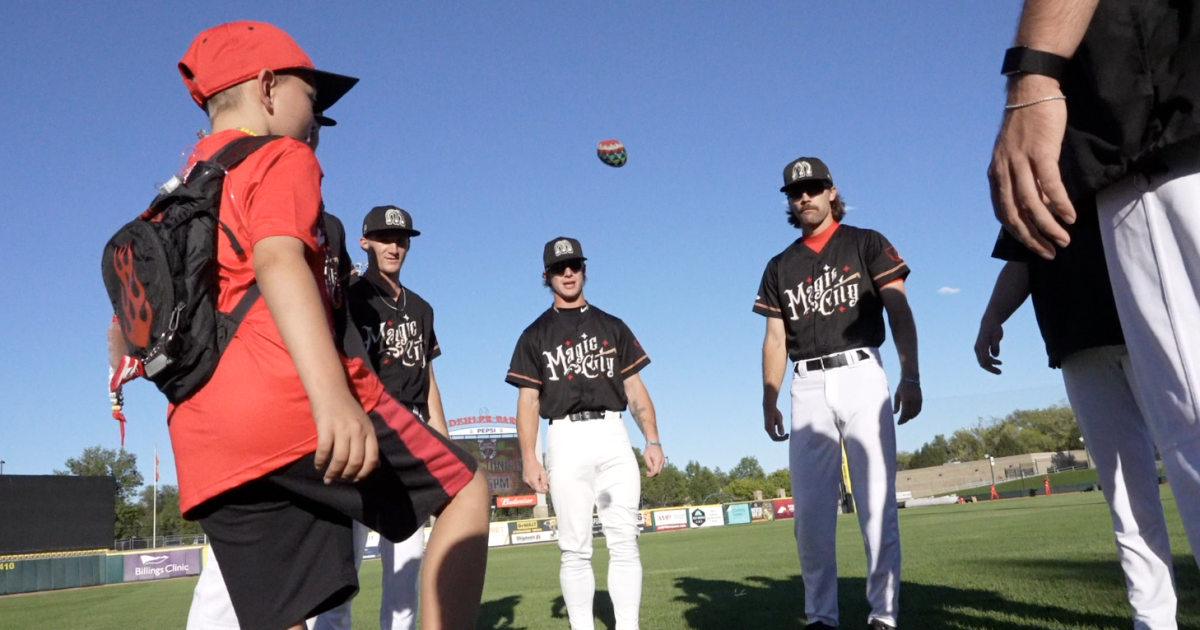
Matty carries a backpack everywhere he goes. It is not filled with toys or snacks but with a continuous flow of chemotherapy medication. "I can't take it off; it's going up into my port," he explained to MTN Sports. This backpack is part of a 28-day, around-the-clock regimen. His mother, Estaleda Webb, noted the restrictions: "So, when he has that backpack on his port is accessed. He can't get wet, he can't go swimming, he can't go fishing."
Every Wednesday brings a new medical hurdle. "I have to go back and get more Blina … a bag change. Get a needle poke," Matty said. The family lives about 60 miles away in Belfry, Montana. To ease the burden, Matty, his mother, and his grandmother have often stayed at the Ronald McDonald House, just blocks from Dehler Park, home of the Mustangs.
The family decided that a "summer of baseball" was exactly what Matty needed. "We try to give him little things to keep him excited," Webb said. Their efforts caught the attention of Kristi and Darrell Vavrosky, who run the Live Like Jace Foundation—named after their son, who died from aggressive skin cancer. They wanted to surprise Matty's family with Mustangs season tickets. When Kristi called the club, the Mustangs insisted on donating them. "It happened kind of quick. We just realized that they were going to need season tickets and called the Mustangs. And within an hour and a half, they had season tickets," Kristi said.
The news moved Matty's mother and grandmother to tears. "We were hoping for just a little bit of help because coming to every game every day does get a little spendy. When they reached out with season tickets we both just started balling. We were on our way to a game," Webb recalled.
The Vavroskys wanted to give Matty another special day. On Friday, they rented a party tent in left field. But that was not all. "And we knew that he wanted to go on the field and be by the players for the National Anthem and play hacky sack with the pitchers," Vavrosky said. The Mustangs accommodated both wishes. Matty fit right into the circle of pitchers—a moment he will not soon forget. "Never been more excited," he admitted with a grin.
Matty's journey is documented on his Facebook page, titled "Matty's fight against 'Zuchinia'"—a name with a story behind it. His mother explained: "The first time he was diagnosed he was three years old. So, when we told him he has leukemia—that's a big word for a 3-year old—he heard 'zucchini' … zuchinia. For, I think it was four years I couldn't get that kid to touch zucchini because he swears up and down that's what gave him cancer."
As Billings prepares to host Missoula in Thursday's 6:35 p.m. Pioneer League playoff opener at Dehler Park, Matty is hoping this is the year of the Mustang—perhaps ending with a league championship. Regardless of the outcome, this summer of baseball is one he will never forget.
Article commentary
This story sits at the intersection of childhood illness, community generosity, and the healing power of sport. It is not merely a feel-good feature but a lens into how a small-town baseball organization can become a lifeline for a family in crisis. The narrative avoids overt sentimentality by grounding itself in concrete details—the chemotherapy backpack, the weekly needle pokes, the 60-mile commute from Belfry. These factual anchors prevent the story from floating into abstraction. The role of the Live Like Jace Foundation is noteworthy. By channeling personal tragedy into purposeful action, Kristi and Darrell Vavrosky demonstrate a model of grief transformed into community support. Their decision to involve the Mustangs, who immediately donated tickets, reflects a cultural norm in minor league baseball: the ballpark as a communal hearth. This synergy between a family foundation and a sports franchise creates a network of care that extends beyond any single donation. From a journalistic perspective, the piece relies heavily on direct quotes, which lend authenticity but also limit analytical depth. The framing of Matty's mispronunciation of leukemia as "zuchinia" is endearing, yet it risks reducing the complexity of his illness to a cute anecdote. A more critical question might explore the financial and emotional toll of pediatric cancer on rural families, or the systemic gaps that make charities like the Ronald McDonald House essential rather than optional. The timeline is fuzzy—the original text jumps from the 28-day regimen to the playoff preview without detailing how long Matty has been in treatment this summer. Readers may wonder about his prognosis, though the story wisely avoids medical speculation. The focus remains on the present moment: a boy at a ballpark, experiencing joy despite adversity. Objectively, this is a well-executed human-interest report. It balances hope with hardship, individual struggle with collective response. However, the piece could strengthen its impact by exploring the broader context of pediatric oncology access in Montana, or by interviewing medical staff about the challenges of continuous chemotherapy. Still, as a snapshot of resilience, it succeeds in showing how baseball can be more than a game—it can be a reprieve, a ritual, and a reason to keep fighting.