Taliban Detains Six Rights Workers, Human Rights Watch Alleges
Source: PBS NewsHour World. Casualplayhub News adds summary, context, and editorial framing while linking back to the original report.
Human Rights Watch has accused the Taliban authorities in Afghanistan of forcibly disappearing six employees of a local organization dedicated to women's and children's rights. The six men, all staff members of the Women and Children Legal Research Foundation, were detained on July 18 after being instructed to come to their office to collect laptops and phones that had been confiscated earlier, according to a statement released by the advocacy group late Wednesday. Their families have been left in the dark, with no word on where they are being held, their health, or what, if any, charges have been filed against them. The group called on the Taliban to allow family visits and legal counsel, and to release the men immediately unless they are charged with a valid criminal offense.
This development arrives on the heels of a separate incident reported by the United Nations. On Sunday, two Afghan employees of the U.N. political mission in Afghanistan were detained in the western city of Herat by the Taliban's General Directorate of Intelligence. U.N. Deputy Spokesman Farhan Haq told reporters that the mission has not been informed of the charges against the two men nor has it been permitted to visit them. The U.N. has demanded that the Taliban respect the privileges and immunities granted to United Nations personnel. The Taliban, which seized power on August 15, 2021, amid the withdrawal of U.S. and NATO forces, has not issued any official comment on either detention.
Human Rights Watch noted that the detention of the six foundation staff occurred a month after security forces raided and sealed their office in Kabul, interrogating employees about their work. The organization's women's rights director, Macarena Sáez, stated that the Taliban appears to view any effort to assist women and girls as a threat to its abusive rule. She urged the authorities to immediately disclose the staff's whereabouts and release them if they are being held unlawfully. The U.N. Assistance Mission in Afghanistan (UNAMA) said Thursday it had no information on the six detentions and could not confirm whether the two incidents are linked.
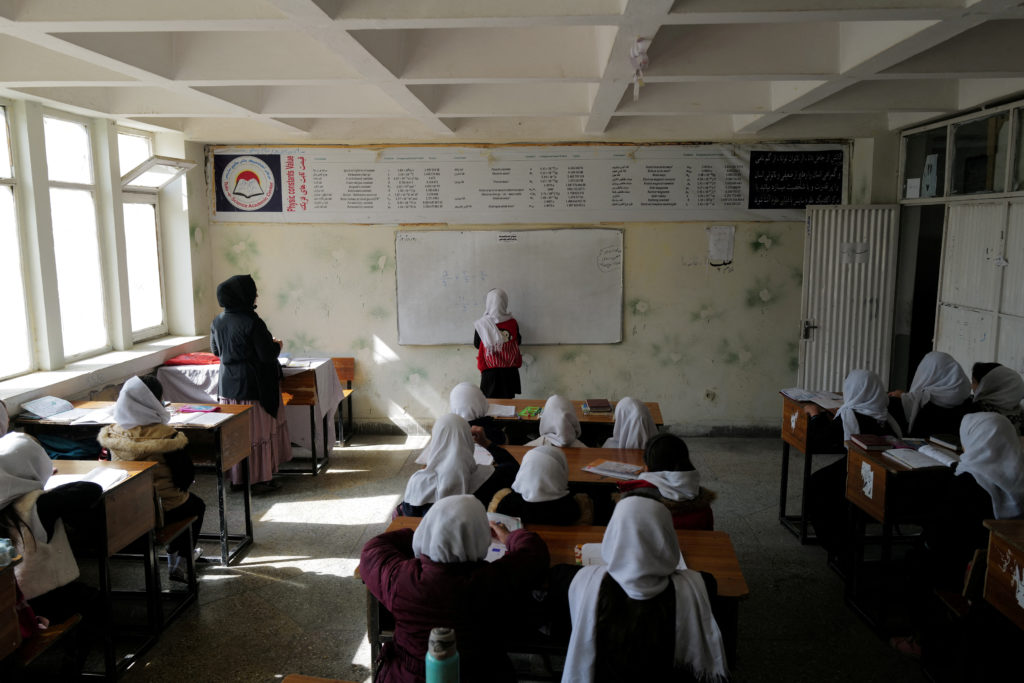
These events unfold as Afghanistan approaches the fifth anniversary of the Taliban's return to power, a period marked by severe restrictions on women and girls, including bans on secondary education, higher education, employment, and public participation. The country is also grappling with a deepening humanitarian crisis, exacerbated by cross-border hostilities with Pakistan. Tensions escalated sharply in February when Afghan forces launched a raid into Pakistan in retaliation for Pakistani airstrikes inside Afghanistan, prompting Islamabad to declare a state of open war. UNAMA's mandate from the U.N. Security Council includes promoting humanitarian aid, human rights, gender equality, inclusive governance, and economic stability, all of which are now under severe strain.
Article commentary
The reported detentions by the Taliban of six staff from a women's and children's rights organization, alongside the separate detention of two U.N. employees, mark a troubling escalation in the Taliban's crackdown on civil society and international presence in Afghanistan. These actions come at a symbolic moment—just days before the fifth anniversary of the Taliban's takeover—and underscore the regime's growing intolerance for any form of advocacy or external oversight, particularly regarding women's and girls' rights. Human Rights Watch's characterization of the detentions as 'forcibly disappeared' is a grave accusation that, if true, would indicate a systematic effort to silence dissent. The fact that the six men were lured to their office under the pretext of retrieving confiscated property suggests a calculated operation. The Taliban's silence on both incidents is telling, as it mirrors a pattern of opaque governance where accountability is absent. The simultaneous detention of U.N. staff further complicates matters, as it challenges the diplomatic immunity that international organizations rely on to operate in conflict zones. From a broader geopolitical perspective, these detentions occur against the backdrop of a worsening humanitarian crisis and active cross-border conflict with Pakistan. The Taliban's focus on internal repression rather than addressing the needs of a population already suffering from poverty, food insecurity, and limited access to education is deeply concerning. The international community, particularly the U.N. Security Council, faces a critical test: will it enforce its own mandates and demand the release of detained personnel, or will it continue to engage with the Taliban on a pragmatic basis, overlooking human rights abuses? The timing also highlights the Taliban's apparent strategy to consolidate power domestically by cracking down on any perceived opposition, including women's rights activists. The ban on girls' secondary education and the exclusion of women from public life have already drawn widespread condemnation, but these detentions signal that the regime is willing to escalate its repressive tactics. This could further isolate the Taliban diplomatically, as countries that have been cautiously engaging with it may reconsider their positions. Ultimately, these incidents serve as a stark reminder that the Taliban's governance model remains fundamentally at odds with international norms. The lack of transparency and due process in these detentions suggests that the rule of law, as understood globally, is absent. The onus is now on the U.N., Human Rights Watch, and other advocacy groups to apply sustained pressure, while also ensuring that the families of the detained receive support. The situation warrants close monitoring, as it may foreshadow a broader clampdown on civil society and international organizations in Afghanistan.